If you walk into our store or browse our online catalogue, you’ll find hotends from E3D, Slice Engineering, Micro Swiss, TriangleLab, Phaetus, and a handful of names you might not recognise. The market has exploded. A decade ago, a V6 was the upgrade. Today, you can buy a drop-in hotend that out-flows a Volcano at half the price, or a proprietary all-in-one that won’t fit anything else on your shelf. Sorting through the noise is literally our job, and after years of stocking, installing, and troubleshooting these things, I’ve learned that the label on the box matters far less than the ecosystem behind it.
This isn’t a directory of every hotend brand. It’s the honest, behind-the-counter guide to what actually works, what fails, and where the market is heading, distilled from the printers we run ourselves and the customers we support every day.
The Underdog That Punched Above Its Weight
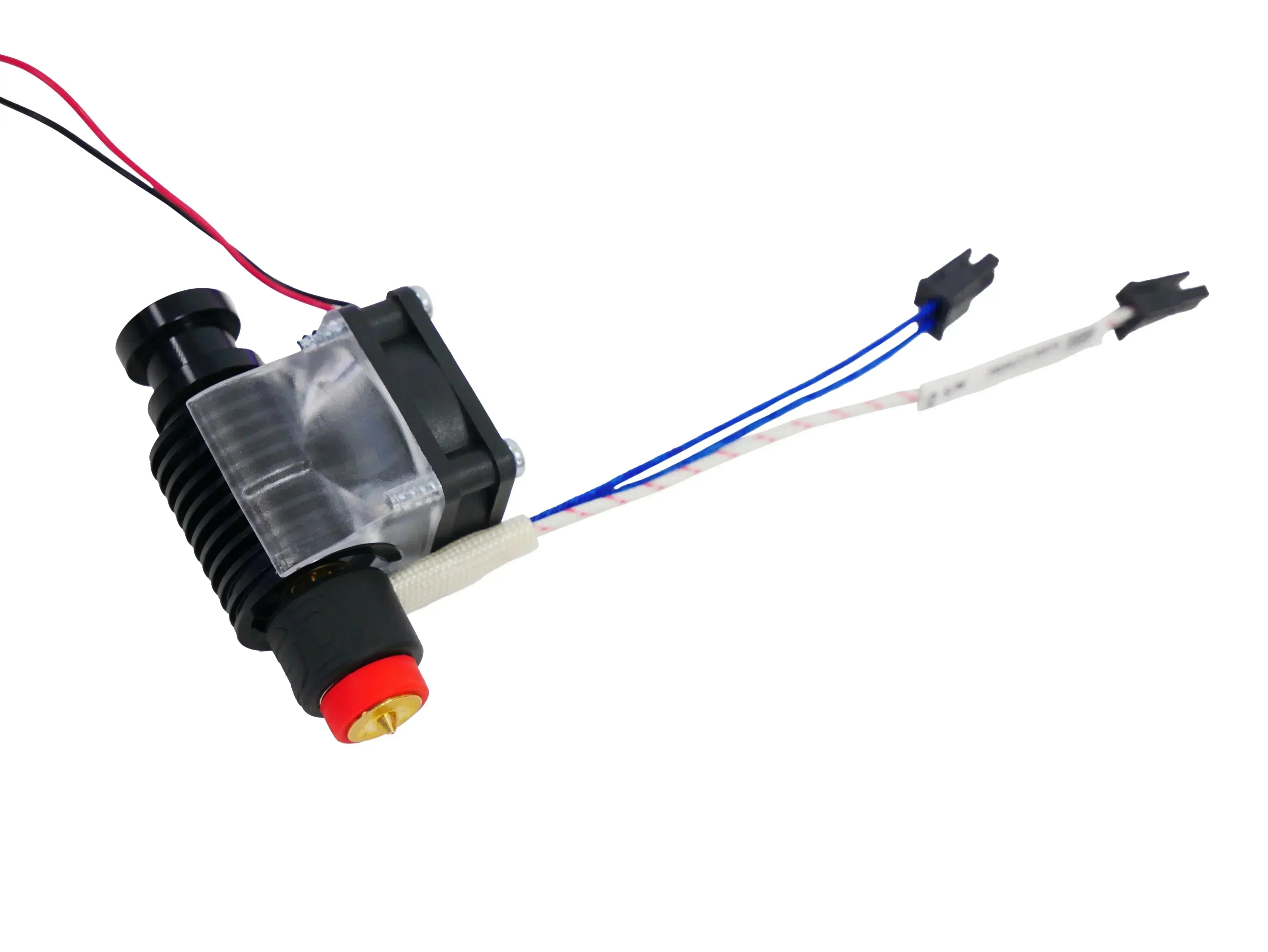
Everyone knows E3D and Slice. But the hotend that quietly impressed us most is one you’ve probably never heard of: the TZ2.0 V6. It’s unbranded, aggressively cheap, and looks like someone took a Bambu-style hotend and married it to a classic V6 groove mount. For a lot of printers still running the old E3D V6 mounting pattern, that’s a killer combination.

The flow characteristics are remarkably close to a stock Bambu hotend, meaning many pre-tuned slicer profiles work straight away without touching a single temperature or retraction setting. It’s not the highest-flow hotend on the market, but for the price, it cannot be beaten. We’ve run them on modified Creality machines, older Prusas, and custom builds where we just wanted a cheap, reliable all-metal hotend that didn’t demand an afternoon of calibration. That hotend taught us that brand cachet is a luxury and ecosystem compatibility and sensible design are what keep your printer running.
The Support Reality: Warranties Are Paper, Plan for Spares
Slice Engineering famously offers a lifetime warranty, but the truth is that any warranty is only as good as the manufacturer’s willingness to approve the claim. In our experience, most hotend failures are not manufacturing defects. They are filament blobs, nozzle crashes, or a thermistor wire yanked loose during a hurried nozzle change. No warranty will cover a blob that engulfed your heater block at 2 a.m.
What actually saves you in that moment is a hotend that’s easy to source spares for. Before you buy anything, ask yourself: can I get a replacement thermistor, heater cartridge, or heat break tomorrow? We stock hotends based on that exact question. The brands that make individual sub-components available and don’t force you to buy an entire assembly because a wire snapped, are the ones that earn a permanent place on our shelf.
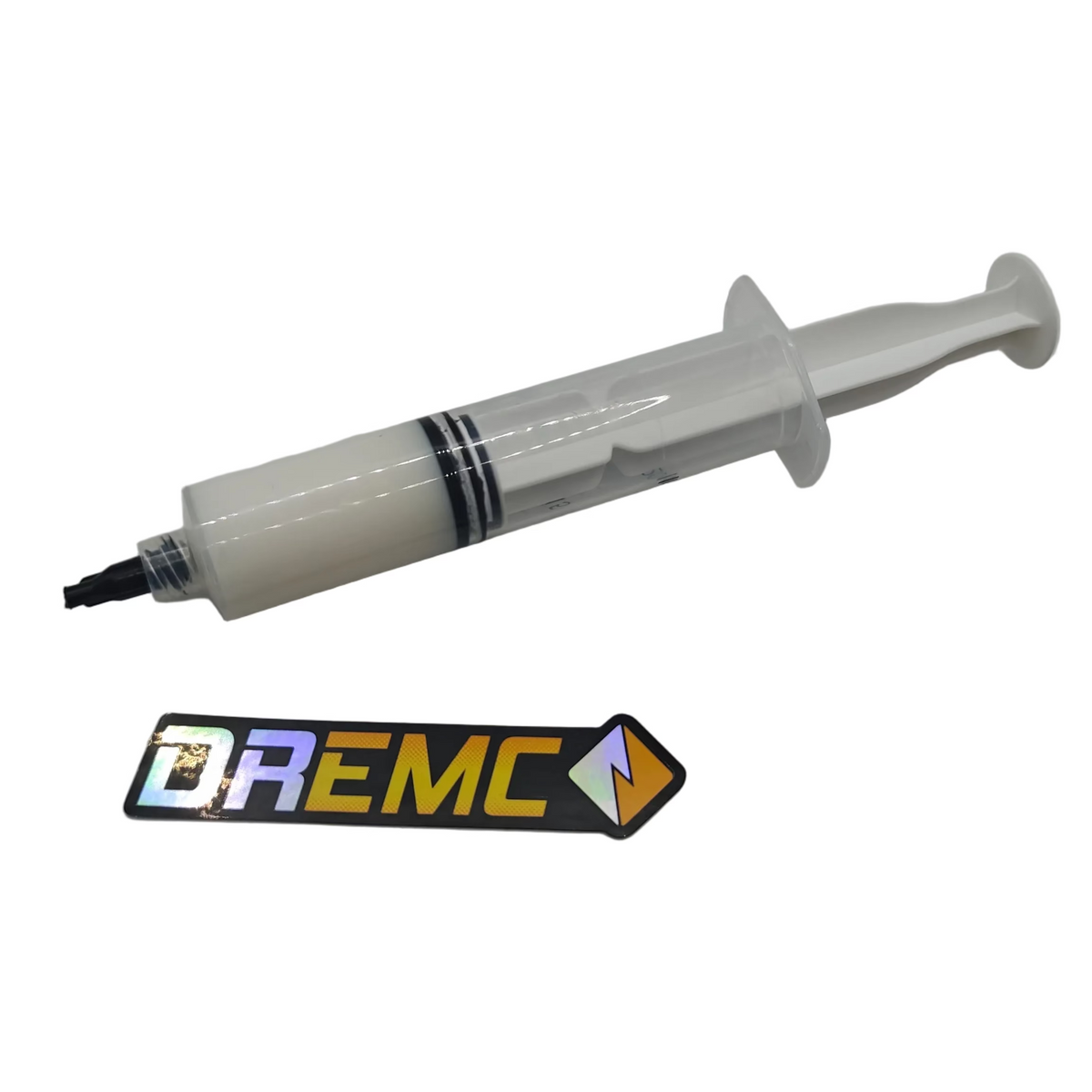
For ABS and ASA blobs, here’s a trick that has saved dozens of hotends on our bench: a some acetone. Soak the entire stripped-down metal assembly. The plastic will dissolve, and you can often reuse the hotend body once everything is cleaned. You might need to replace the thermistor or heater, but those are cheap. The expensive machined components survive.
The newer single-assembly designs, like the E3D Revo, flip that equation. When a heater core or thermistor fails, you unscrew the entire nozzle-and-heat-break unit and thread in a new one. No wiring, no wrenches on delicate ceramic. The trade-off is cost—each replacement is pricier than a bare thermisto but for a print farm where uptime is everything, the speed of the swap often justifies the premium. We stock both philosophies because the right answer changes depending on who’s asking.
The Upgrade Conversation: When to Stay Stock (and When Not To)
Modern printers ship with hotends that are genuinely good. A stock Prusa MK4, Bambu X1, or even a recent Creality K1 doesn’t need an after market hotend to produce excellent prints. When a customer comes in determined to “upgrade,” the first thing I ask is: what problem are you trying to solve? Are you limited by nozzle size or material type? Are you hitting the flow ceiling on your current setup? Is nozzle swapping a nightmare?
In most cases, the honest recommendation is a direct replacement, not an upgrade. Today’s stock hotends are all-metal, flow well, and handle everyday filaments without fuss. An aftermarket hotend will almost certainly require profile re-tuning higher flow characteristics, different thermal behaviour and if the user isn’t prepared for that, they’ll chase print quality issues for weeks. I’ve watched customers swap a perfectly fine hotend for a premium one, only to complain that their prints look worse. They don’t. They just need a different temperature, a retraction tweak, pressure advance changes, and a little patience. If you’re not ready to invest that time, stick with stock.
The time to upgrade is when your stock hotend is demonstrably unreliable maybe it needs a new PTFE liner every two weeks, the heat creep is chronic, or the nozzle is a proprietary shape you can’t source. If you’re replacing the entire hotend assembly repeatedly, the economics shift. At that point, we’ll guide you toward a more robust alternative, ideally one that uses standard nozzles and easily replaceable components so you’re not stuck in the same loop two years later.
The Dream We’re Still Chasing: A Universal Hotend Ecosystem
If I could wave a magic wand and change one thing about this industry, it would be a single, universal hotend ecosystem. A standard nozzle interface that works across brands, a common heater and thermistor footprint, and a mount that doesn’t require a new custom bracket for every printer generation. In a print farm running a mixed fleet, the drawer of spares becomes a disaster: Bambu nozzles, Creality ceramic cores, Revo units, V6 blocks. The inventory overhead is real.
For now, the practical solution is to standardise your farm on one printer model but even that is fragile. Manufacturers love to refresh their hotend design with each new machine, leaving perfectly good parts incompatible with the next generation. Some of the largest brands could solve this overnight by open-sourcing their mount geometry and nozzle spec, or at the very least, committing to backwards compatibility across product cycles.
We’re not there yet. Until then, my advice remains: pick a hotend ecosystem that treats components as consumables you can actually buy, prioritise spares availability over marketing claims, and never assume the shiny new part will solve a problem you haven’t clearly defined. The best hotend in the world is the one you can still get parts for five years from now.