If you run a resin printer, the release film at the bottom of your vat is a wear item, not a permanent fixture. Yet most users never think about it until a failed print forces them to stare at a cloudy, dented, or punctured sheet of FEP and then they grab whatever replacement is cheapest. That’s a false economy.
At DREMC, we spend a lot of time on the other end of support messages helping people who have just swapped their film and suddenly can’t get a print to stick, or find their new film ruined in a week. The reality is that the film you choose FEP, nFEP, or ACF changes your print settings, your maintenance rhythm, and your long-term cost. Here’s what actually matters, not just what the spec sheets claim.
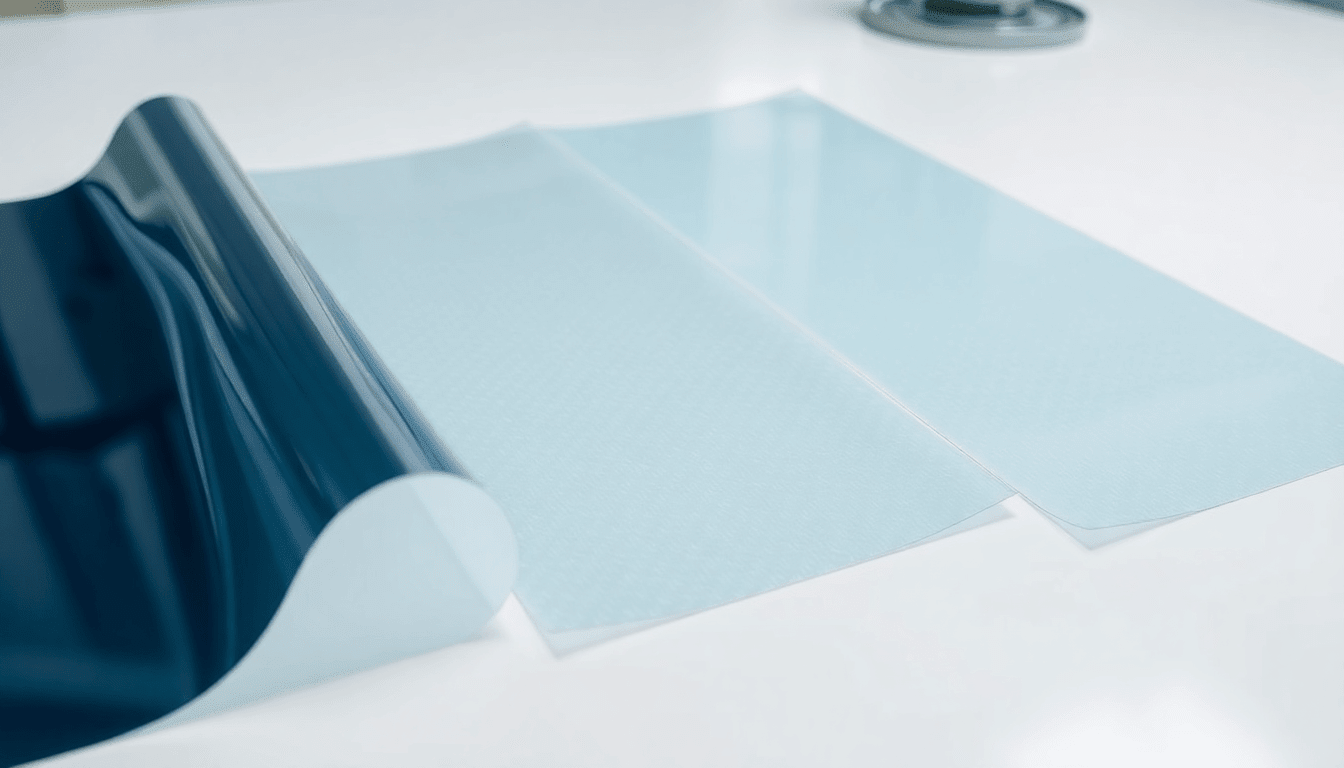
The Three Films at a Glance
-
FEP (Fluorinated Ethylene Propylene): The original workhorse. Clear, chemically resistant, and still found in budget printers and older models. It works perfectly fine, but it’s being phased out in new machines for a reason.
-
nFEP (Non-Fluorinated Ethylene Propylene): A surface-treated evolution of standard FEP that reduces peel force significantly. Most mid-generation resin printers shipped with nFEP. It’s the sweet spot of price, performance, and ease of use for many users with minimal changes to print setting from FEP.
-
ACF (Artificial Continuity Film): A newer material, often textured on one side, designed specifically for the latest generation of high-speed printers. It combines a low-energy release surface with high durability, but it’s not a magic bullet.
All three will produce a beautiful print when used correctly. The differences are in longevity, the settings you’ll need to dial in, and how large or flat your prints are.
Real-World Performance: What We’ve Actually Seen
We’ve run these films side-by-side from manufacturers like Creality, Anycubic, and Elegoo. For smaller parts think a D&D miniature, a custom dental model, or a set of fine jewelry patterns, you would be hard pressed to tell which film was used just by looking at the surface finish for an average user/end consumer. A well-tuned nFEP and a well-tuned ACF produce near-identical detail on tiny parts. The resin, your exposure time, and the printer’s light engine matter more.
Large, flat surfaces are where ACF starts to show its character. On an expansive, flat bottom layer, ACF can leave a very faint textured look. Not a defect, but a subtle characteristic you won’t get from smooth nFEP. For most functional and aesthetic prints, it’s invisible. If you’re producing optically critical flat parts, it’s something to keep in mind.
Longevity is where the real gap appears. ACF consistently outlasts both FEP and nFEP under heavy use, sometimes by a factor of two or more. When you factor in the cost of your own time to swap a film, that extra durability pays for itself quickly. Although this can also depend on type of resin, pull up speed, and some printer have tilting bed which result the force require to separate the part from film per layer.
Our Film Stock and Why It’s Mostly ACF
At DREMC, our shelf is primarily ACF. That’s a deliberate choice. Most of the new “fast” resin printers shipping today for example the Photon Mono M5s, the Elegoo Saturn 3 Ultra, the Anycubic Photon Mono M7 are designed with ACF as standard. The speed-oriented release mechanisms in these machines are tuned for ACF’s low peel force. We stock what the installed base actually needs.
Across the brands we’ve tested, all major manufacturers’ films perform within their rated lifetime averages (as they mostly sourcing from a couple select OEMs), provided they are installed correctly and the printer’s settings are adjusted for the film type. There is one practical difference worth knowing: some manufacturers ship their films flat, and some ship them rolled (to lower shipping cost and reduce transit damage). Rolled films can arrive curled and need to be flattened before installation. It’s a minor hassle, but if you skip this step, you’ll fight an inconsistent tension across the vat.
A special case: Formlabs 4 uses a custom “two-layer” film that you can only source directly from the manufacturer. This is an exception, and if you own a Form 4, stick with the OEM film.
The Number One Headache: Installation (And How to Get It Right)
The most frequent complaint we hear has nothing to do with print quality. It’s installation.
Swapping a release film takes time, and doing it improperly, over-tensioning, under-tensioning, trapping dust under the film, or nicking it with a tool. It can ruin a new sheet before a single print. Worse, a poorly installed film will produce prints that fail repeatedly, leading to a spiral of frustration where the user blames the resin, the printer, or the film itself.
Here’s a truth that doesn’t show up in most manuals: you must also recalibrate your exposure settings when you switch between film types. ACF peels so easily that you may be able to run slightly lower lift heights and faster speeds, but you might need a touch more exposure to compensate for the different optical characteristics. Failure to adjust is the hidden reason many people think a new film “doesn’t work.”
For tension, the rule is simple: bouncy, not tight. The film should resonate like a drum skin with a little give, not be pulled flat with zero movement. The video below demonstrates the correct tension and the common error of over tightening that leads to cracked films and failed prints (around 16:35 mark).
Specific installation steps depend on your printer model, so always check the manufacturer’s guide. But a couple of universal rules apply: order oversized sheets and cut away the excess with sharp scissors after clamping which gives you margin for error. And always wear gloves when handling the film; oils from your fingers will alter the release surface in those spots and also if you're dealing with old vats may be uncured resin on it.
Is ACF Worth the Price for a Hobbyist?
Yes, but not for the reason you think.
A few years ago ACF was genuinely expensive. Today, the price has scaled down so much that the premium over nFEP is modest and the durability increase means you’ll replace the film far less often. Here’s the calculation that matters: the cost of the film is almost always less than the value of the time you spend installing it. A film that lasts twice as long cuts your maintenance labour in half. Over a year of steady printing, ACF becomes the economical choice, not the premium one.
There are emerging film technologies on the horizon multi-layer materials, hybrid treatments but none have yet displaced ACF in the consumer space yet. For the average user buying a film today, ACF is the safe, forward-compatible choice that will outlive several FEP replacements and keep your printer printing, not waiting for a repair.