
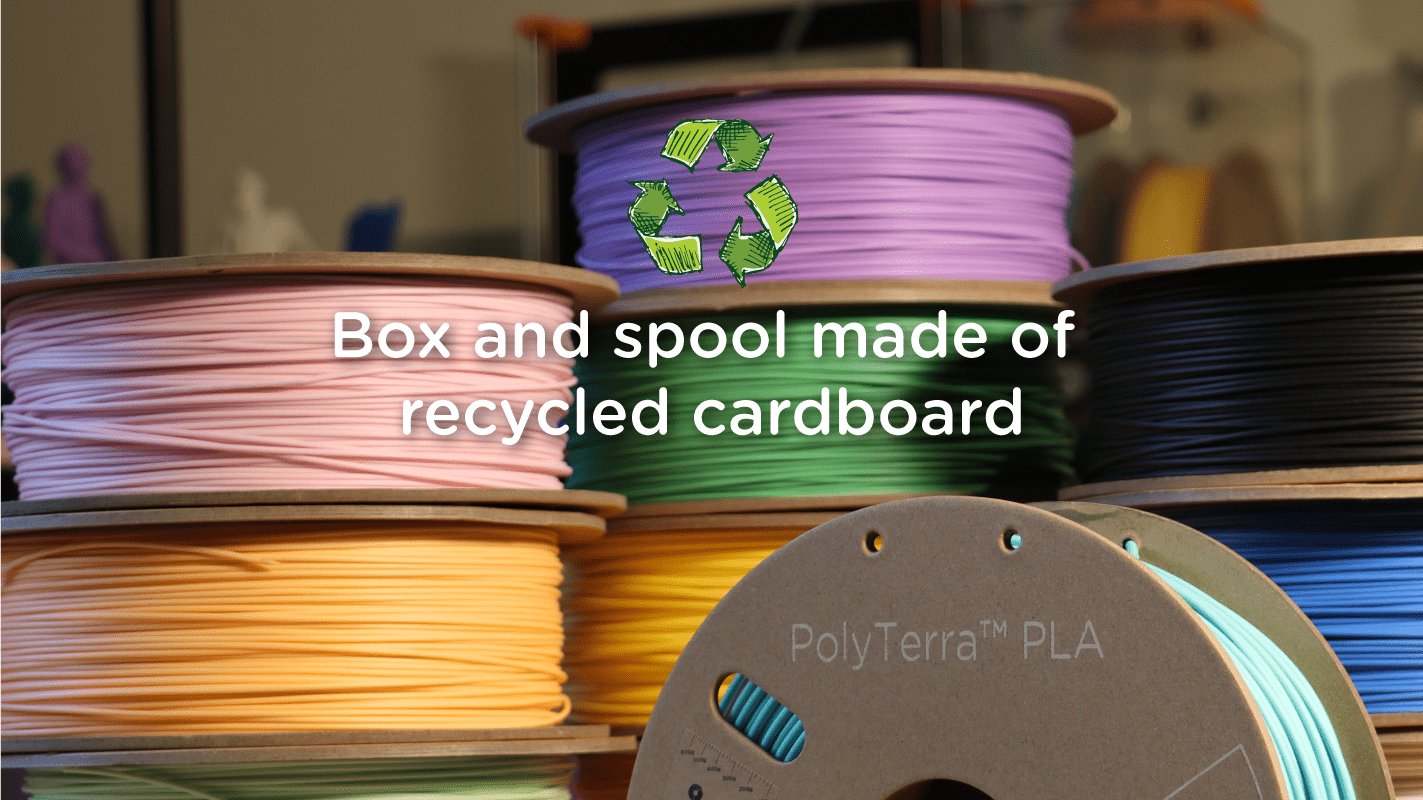
Polymaker Shifts To Recyclable Cardboard Spools


“After releasing PolyTerra PLA ​​​​​​​on cardboard packaging earlier this year, we received many compliments from our customers praising our efforts to be eco-friendlier. Many customers loved our new cardboard spool both for its usability and disposability." - Polymaker

To further our efforts and establish a consistent brand image that contributes more on environmental packaging, over the next couple of months Polymaker range will slowly phase out 1KG plastic spools onto cardboard spools not just Polyterra range!”


This is not made from the cardboard you’d expect. Instead it’s a 4mm thick “pressed and die-cut” sheet. This is fantastically stronger than common cardboard and should be able to easily withstand the bumps and crashes spools must endure.
FilamentStore updates

Leave a comment

All comments are moderated before being published

Latest Blog Posts

View all
Mercury Zero One or Hydra: Which Upgrade Should You Do First?

Mercury Zero One or Hydra: Which Upgrade Should You Do First?

Product Comparison
If you own an Ender 5 or Ender 5 Plus and have been eyeing the ZeroG ecosystem, you have probably faced the same question: should I convert the mot...
How to Know Which 3D Printer Spare Parts to Stock: A repairer for 3D Printer Farms - DREMC STORE 3D Printing Supplies

How to Know Which 3D Printer Spare Parts to Stock: A repairer for 3D Printer Farms

We learned the hard way: small moving parts fail without warning, proprietary electronics can scrap a printer, and most people hoard the wrong spares. Here's exactly what to stock from hotends to fans to one mainboard per five machines and why open-source printers are the ultimate insurance policy.

3D Printer Extruder Parts: When to Replace and Why - DREMC STORE 3D Printing Supplies

3D Printer Extruder Parts: When to Replace and Why

3D Printing Maintenance

Extruder wear is silent and predictable until it isn’t. Learn exactly which components wear first (gears, arms, guides), the subtle print quality signs that warn you, and the staged replacement schedule that prevents expensive farm downtime.