


Description
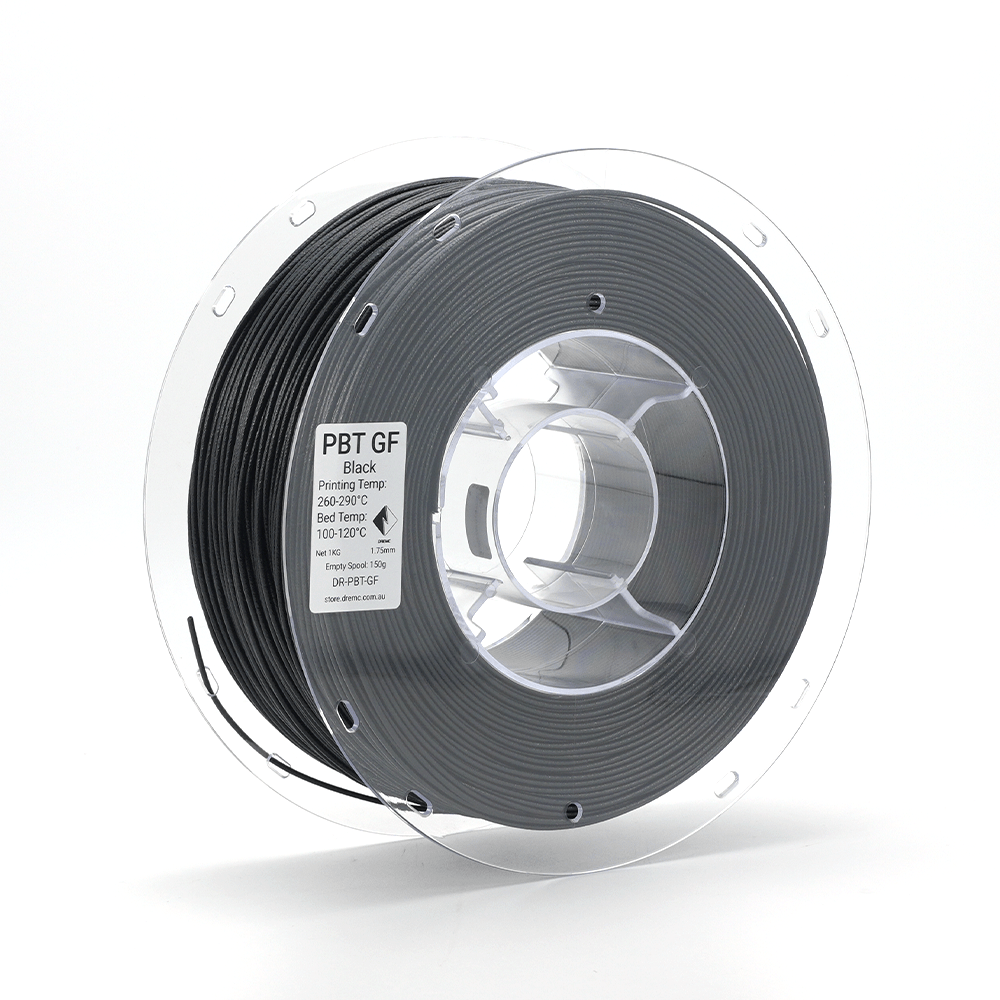
DREMC's PBT-GF is a polybutylene terephthalate with glass fiber 3D printing filament. Its <10% glass fibre composition provides exceptional heat resistance and minimal shrinkage. With impressive rigidity, tensile strength, and excellent anti static properties. This filament is a reliable choice for printing durable and stable parts. Ideal for a variety of applications that demand high-quality printed components such as connectors/switches in automotive applications.
Please note, this has been EOL for retails customers, these are still avaible to be purchased through B2B (MOQ 1 carton), this has been replaced with PC PBT GF which is easier to print.
Materials Features/Applications
- High quality BASF Ultradur PBT-GF resin (contain chopped GF<10%)
- Note 1: This material is highly recommended for tool changer/IDEX printers. For better bed adhesion and to reduce warping, it is best to use PC ABS, ABS, or PC(similar material blend) for the first couples layer or support raft. A suitable bed adhesion solution or compatible build plate is required, as this material does not adhere well to most standard bed adhesives and build plates. (More Info: https://support.dremc.com.au/en/support/solutions/articles/51000463967-dremc-pbt-gf-first-layer-printing-guide) Otherwise PC PBT GF is easier to print in comparison and adhere to most textured PEI without issues.
- Note 2: at least 60-90c minimal active/passive chamber is recommended, our recommendation is 80-100c+, to reduce warping/material shrinkage during printing on complex parts.
Materials/Spool/Packaging Information:
- Plastic spool and packaging
- Vacuum sealed bag with an additional re-usable mylar bag
- Diameter: 1.75mm (+/- 0.05mm)
- Net weight: 1KG
- Density: 1.35 g/cm3
- Empty Plastic Spool: ~150g
Abrasive resistance nozzle is requirement due to glass fibre, plated/brass nozzle can wear quickly and cause inconsistent prints and will destroy those types of nozzles.
Printing Settings/Requirements
A wear resistant nozzle must be used, carbon fiber material is abrasive and will wear standard brass nozzles and >0.5mm nozzle is recommended.
For best results, dry filament using a filament drier before use and print from dryer running or dry box. Keep in an airtight container or included mylar bag for medium/long term storage with silica desiccant. [If you hear popping or inconsistent extrusion while purging filament, suggest drying before printing for best results] Filament Drying Guide
Print Profile Example: https://support.dremc.com.au/en/support/solutions/articles/51000343310-dremc-filament-3d-printing-profile
Materials tested compatibility on Vision Miner 22 Idex V3, Flashforge Guider 3 Ultra and Modified Voron Trident Idex / Single Toolhead Voron Trident / Bambu X1E with first layer using PC ABS or ABS.
Note: At temperatures above >290°C can and may emitted: carbon monoxide, tetrahydrofuran. Material is stable up to 280°C and do not give rise to hazards due to molecular degradation or the evolution of gases and vapors. Like all thermoplastic polymers. See Product SDS.
Note: Ensure your hotend is accurately temperature-calibrated, and do not exceed the recommended printing temperature of 280°C. Always print in an enclosed setup with active exhaust, and make sure your workspace is equipped with a carbon monoxide sensor for added safety.
Brittle Materials Guide: https://support.dremc.com.au/en/support/solutions/articles/51000492353-print-tip-brittle-materials-carbon-fibre-glass-fibre-sparkle-glow-in-dark-
| Nozzle Temperature | 260°C - 280°C |
|---|---|
| Build Plate Temperature | 100°C - 120°C |
| Build Surface Material | Works well with most common build surfaces. We recommended PEI Build Plate (Smooth/Textured) with Bed Adhesive such as Glue Stick / Magigoo HT. [Do not print on bare PEI without bed adhesive barrier] |
| Cooling Fan | LOW-MEDIUM for better surface quality OFF-LOW (<10%) for better strength |
| Enclosure / Heater Chambers |
Recommended for complex larger geometries. Recommend VOC/Air Filtering/fume extraction or print in well ventilated room with fume extraction. |
| Printing Speed | 40 mm/s - 100 mm/s (<60mm/s is our recommendation for most pro-consumer hardware) |
| Retraction | The ideal retraction settings vary from printer to printer. If you find the retraction settings are causing gaps in your part, the following settings may help. Direct Drive: Retraction distance of 0.5 - 1mm with retraction speed of 20mm/s Bowden: Retraction distance of 2 - 3mm with retraction speed of 20 - 40mm/s |
| Drying Recommendation | ~80°c for 8-12hr (Only dry if filament is wet, over drying/repeat drying can damage filament) REQUIRE PRINTED CLAMP WHEN DRYING (Filament Dryer Guide) |
| Storage | Keeping filament in an airtight container or provided Mylar bag with new/dried desiccant. |
Note: Due to the low co-efficient of friction please ensure you have smooth filament path from filament box/dryer. We recommended 3x4mm PTFE to be used for reverse bowden.
Based on 0.5/0.6 mm nozzle. Printing conditions may vary with different printers and nozzle diameters.
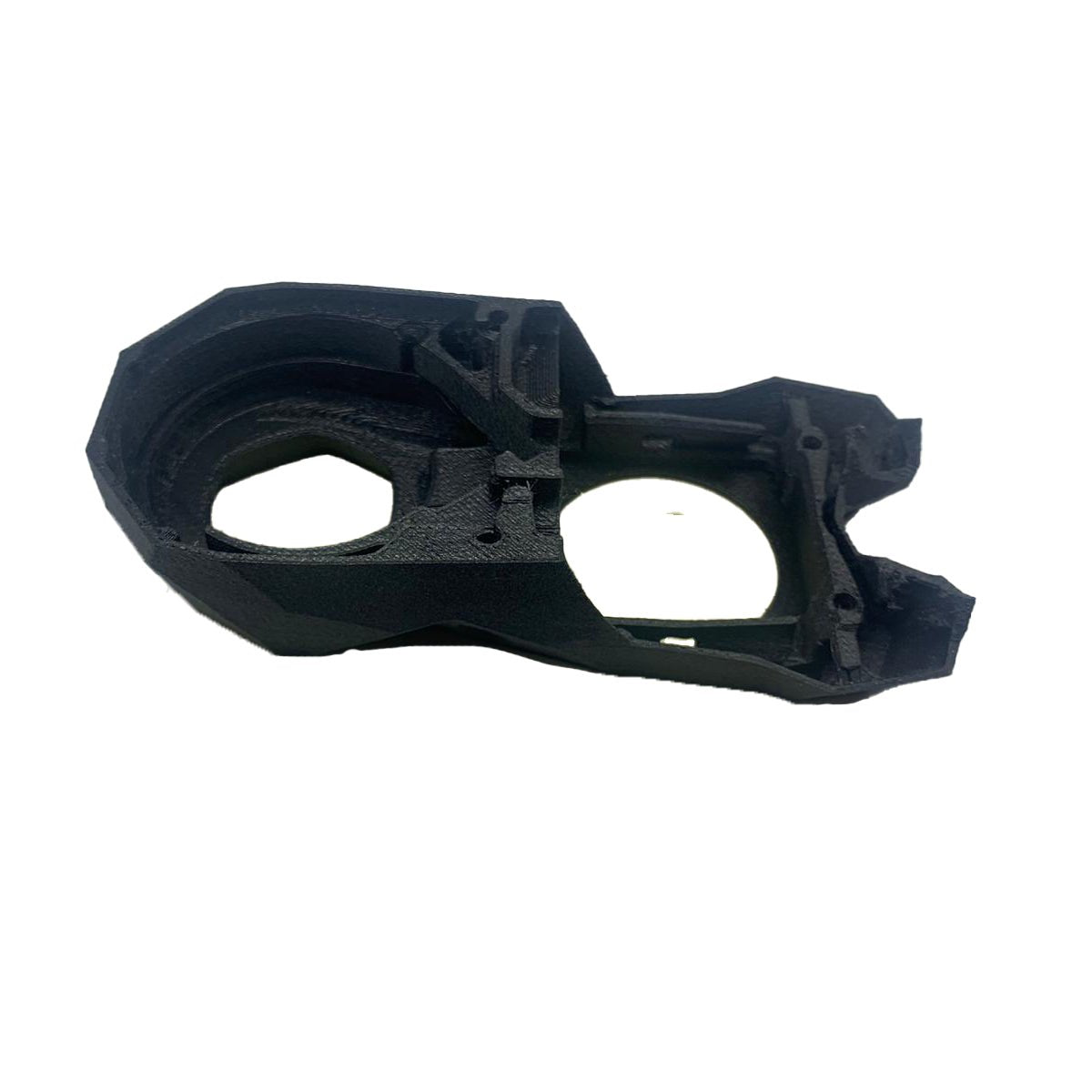
Test Print: Voron SB Main Body - Note: (First layer is PC ABS with Brim on Textured PEI with Magigoo)
* As always you should do temperature to tower as each machine printing temperature may vary depending on hotend/printing speed etc.
Spool Size:
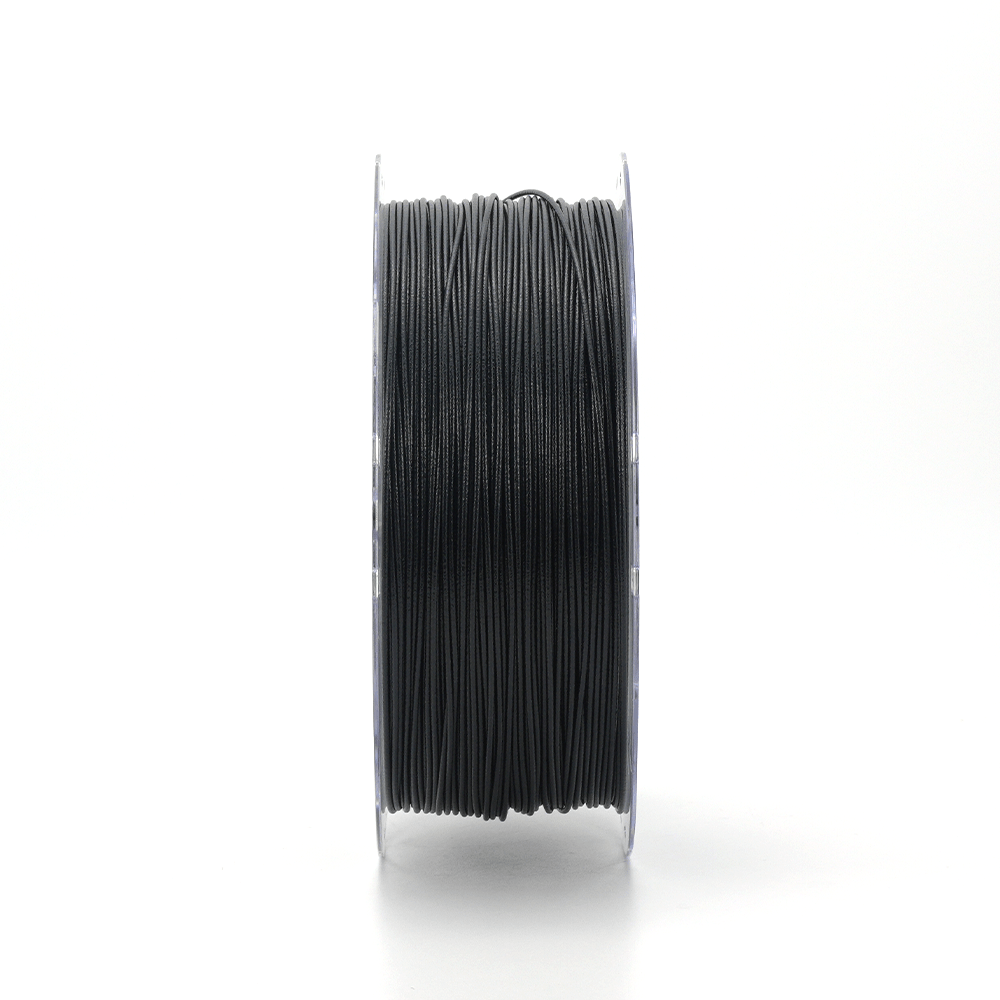
- Spool Diameter: 198mm (+/-1mm)
- Spool Hub Diameter: 53mm (+/-1mm)
- Spool Width: 65mm (+/-1mm)
Payment & Security
Your payment information is processed securely. We do not store credit card details nor have access to your credit card information.
You may also like
Please double check product compatibility