Understanding PTFE Tubes
What is PTFE (Polytetrafluoroethylene)?
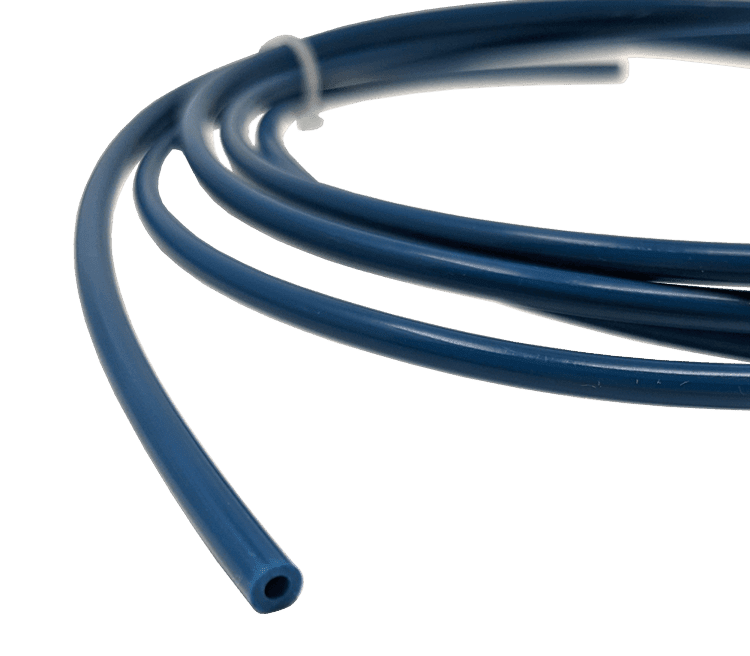
PTFE, commonly known as Teflon, is a high-performance plastic known for its low friction properties and chemical resistance. In 3D printers, PTFE tubes are used to guide filament from the spool to the extruder and then to the hotend. This material ensures smooth filament path, reducing the chances of jams and improving print reliability.
Common Applications of PTFE Tubes in 3D Printers
PTFE tubes are integral to older Bowden-style 3D printers, where the filament is pushed through a long tube to reach the hotend. Selecting the proper PTFE tube size is vital for ensuring optimal extrusion and consistent print results. In this case, a you want to look for as small ID to match the materials which are usually 2mm or 1.9mm, to reduce the amount of play in filament path from extruder to the hotend, as change this filament path distance/amount can dramatically effect the materials flow and print quality. Also the less frictions in the ptfe, its mean the extruder requires less force which mean less chance stripping the materials while feeding.
In the modern direct drive system, this is less of concern due to the much shorter distance from around 500-600mm (longer as you scale in printer size) as bowden are mounted away from toolhead/hotend, to around 10-20mm depending on direct drive tool heads.
By understanding how PTFE tubes work and their role in your 3D printing process, you're better equipped to make informed decisions when selecting the right inner diameter for your needs.
Importance of Inner Diameter (ID)
The inner diameter (ID) of the PTFE tube is a pivotal factor that affects filament feeding and extrusion. A tube that is too narrow may restrict filament movement, leading to clogs and poor print quality, extra wear on the extruder or more stress on extruder component as its require more force to push filament through the system.
Comparison of Tube Sizes: 1.9mm, 2.0mm, 2.5mm, and 3.0mm
1.9mm Tube
- Pros: Provides a snug fit for standard filaments, reducing the chances of movement usually in bowden set-up reduce the amount of PA variance.
- Cons: May not be ideal for some lower quality materials not great filament tolerance and also some TPU.
- Best For: In Bowden or Direct Drive set-up
2.0mm Tube
- Pros: Provides a snug fit for standard filaments, slight higher the chances of movement usually in bowden set-up compare to 1.9mm which may increase the amount of PA variance, depending on length.
- Best For: In Bowden or Direct Drive set-up where some lower quality filament may be used which has larger tolerance.
2.5mm Tube
- Pros: Excellent filament balance for reverse bowden setup for regular materials as its stiffness and less prone to crushing as larger ID.
- Cons: The wider diameter can lead to less control over filament movement, so its not suitable to be used between extruder and hotend which you want as restrictive as possible to minimised the variance of PA that may required.
- Best For: For reversed bowden setup for regular materials, also widely used in AMS/CFS styles buffer systems, with enough stiffness not suffer prone crushing of lager ID 3mm.
3.0mm Tube
- Pros: Excellent filament that prone to friction/drag due to larger variance or materials properties, with larger ID its results in less contact area with materials as its feed within the PTFE compare to smaller tighter size.
- Cons: Can lead to excess movement, not suitable for section between hotend and extruder. Also due to the thinner walls PTFE, its more prone to crush point of PTFE when routing around tight bend radius or handling.
- Best For: For reversed bowden setup for abrasive materials which usually chopped materials which cause larger deviation and more friction, where large PTFE results in less surface area touching material reducing drag.